Inventing card names and titles that sound like the person
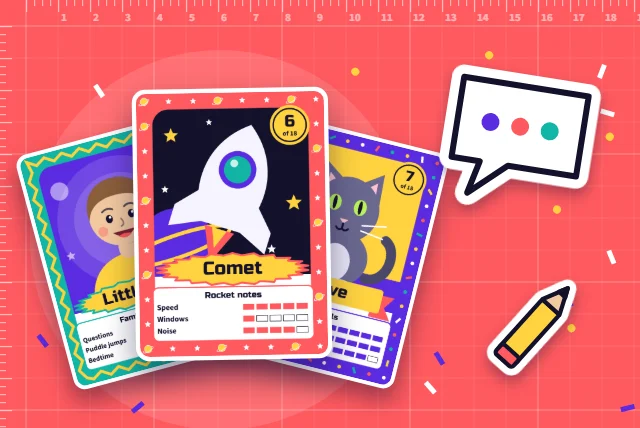
Picture a snapshot of your aunt holding a muddy trowel, grinning at a row of seedlings. You could type her first name on the banner and stop there. That works. But a banner that reads “Bea, Seedling Whisperer” tells everyone why this card exists, even someone who never saw the garden.
A good card name is small. It has to fit a strip of color a couple of inches wide, and it has to make its owner smile instead of wince. You do not need to be clever on the first try. You need a pile of raw words, a way to sort them, and a quick test on the card itself.
Decide what the banner has to say
Most card names have two parts: who it is, and what makes them that person today. The first part is a first name or a nickname the person likes. The second part is a title, and it is optional. Leave surnames off. A first name is enough for the people who will hold the card, and it keeps private details out of something that may travel.
Here are five shapes you can fill in. Pick one and the blank page stops being blank.
| Shape | Example | Good for |
|---|---|---|
| Name only | Milo | Young children, pets, very busy photos |
| Name, then title | Bea, Seedling Whisperer | Adults with a clear hobby |
| Title, then name | Captain Teo | Playful sets and party tables |
| The + habit | The Early Riser | Cards where the photo already shows who it is |
| Place or thing + keeper | Keeper of the Spare Keys | The person everyone relies on |
If the title grows long, put the name on the banner and move the title to a small label underneath. Two short lines read better than one squeezed line.
Collect raw words before you judge any of them
Names go flat when you try to write the finished one straight away. A handout on brainstorming from the Writing Center at UNC at Chapel Hill describes several ways to get words out first and sort them later. Three of them suit card names very well.
- Listing. Write the person’s name at the top of a sheet. Under it, list every object, habit and phrase you connect with them. Do not stop to rank them.
- Journalist questions. Write Who, What, When, Where, Why and How down the margin. “When do they shine?” and “Where do you always find them?” tend to produce concrete answers.
- Comparisons. Finish the line “Teo is like a ___” as many times as you can. A lighthouse, a toolbox, a kettle that is always on.
Here is a short worked example for an uncle called Teo. The list says: fishing hat, fixes bikes, hums while cooking, always early, carries string, tells the same river story. Six scraps of ordinary life. Each one can become a title: Hat of Many Fishes, Chain Doctor, The Humming Chef, First at the Door, Master of String, River Storyteller.
None of these took talent. They took a list. The best one is usually the item that makes a second family member say “oh, that is so him.”
Trim the list until the name fits the strip
Now be strict. A Classic card is 2.5 in wide, so a banner that stays 1/8 in inside each edge can be 2.25 in wide at most. As a rough rule of thumb, aim for about 18 characters or fewer, counting spaces, if you want large, bold lettering. “River Storyteller” is 17. “The Man Who Tells the River Story” is 33 and will need tiny type or two lines.
Plain, familiar words help. The plain language guides on Digital.gov are written for public information, yet the idea carries over neatly to a card: write so the intended reader understands. Your readers might be six years old or ninety. A joke that needs explaining will not survive the trip to a shoebox and back.
Then test it on the real thing. Open Card Workshop, add a name banner and type your longest candidate first. Banners come as ribbon, pill, tape, plank, burst or tab shapes, and they do not all leave the same room for letters. A shape with points, such as a burst, may leave less flat room than a plank or a pill, so check yours. Colors and text are editable, so try two shapes with the same words and keep the one that reads at a glance.
Make a whole set sound like one family
When you make several cards, the names are heard together. A set sounds tidy when it follows one pattern, such as name plus title for everyone, and lively when the words inside the pattern differ. Compare “Bea, Seedling Whisperer” and “Teo, Chain Doctor” with a third card that just says “Grandma.” The third one looks like an afterthought, even though nobody meant it that way.
Check three things across the whole group:
- Every card uses the same shape of name.
- No two titles use the same key word, such as two “Captains.”
- Titles are about the same size of compliment, so one person is not “Legend” while another is “Helper.”
The last point matters more than it seems. If you are making cards about real people, read the guide to kind wording before you print.
Let the name steer the rest of the card
A strong title does extra work. “Chain Doctor” suggests a bicycle photo, a plank banner and a couple of matching attributes. Once the name is chosen, you can turn the same list of habits into attributes, and the leftovers from your sheet become the lines of a short description.
In your Collection, give each card the same name you put on its banner. Then the list on screen matches the cards on the table, and filtering by name finds what you expect. If two people share a first name, add the title in the Collection name so you can tell them apart.
Common mistakes
- Using a joke only you understand
- Show the name to one other person who knows the subject. If they look puzzled, choose a clearer habit.
- Squeezing a sentence onto the banner
- Keep the name on the banner and move the rest to a small label or a description line.
- Giving one person a grand title and another a dull one
- Read all names in a row and adjust so each one feels equally warm.
- Putting a surname or other private detail in the title
- Use a first name or nickname only. Cards get shown around and passed along.
Questions and answers
What if the person has no obvious hobby?
Look at small routines instead: how they say hello, what they carry, where they sit. “Keeper of the Good Chair” is a fine title.
Can a pet have a title?
Yes, and pets are easy to write for. Think of the thing they do daily, such as “Sir Naps a Lot” or “Door Inspector.”
Should the title be written in capital letters?
A short title in capitals can look smart on a banner. For anything longer than a few words, ordinary capitals and lowercase are easier to read.
What if the person does not like the title?
Change it. The card is a present, so their comfort beats your favorite pun. Duplicate the card, edit the banner and print the new one.
Sources
- The Writing Center, UNC at Chapel Hill: Brainstorming (checked November 27, 2026)
- Digital.gov: Plain language guide series (checked November 27, 2026)
Found a mistake? See how corrections work.