Kind wording for cards about real people
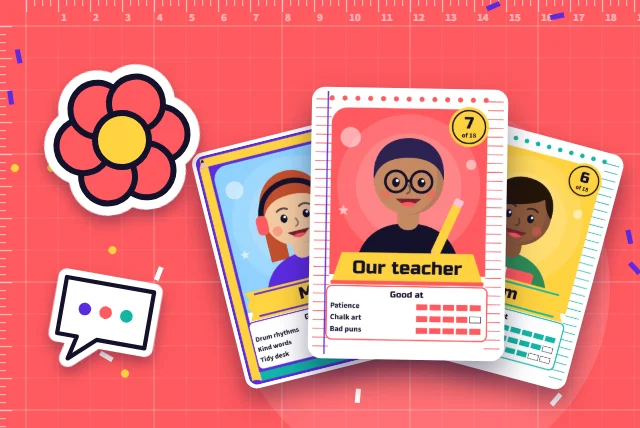
A card meant as a joke can sit in a drawer for years. The person who wrote “Worst cook ever” forgets it by dinner. The person it was about may remember it every time they pick up a pan.
Cards invite short, punchy labels and neat scores, and both can cut deeper than the same words spoken with a smile. A printed card has no tone of voice. It can be shown around, compared and kept. A little care while writing keeps the fun and leaves out the bruise.
Notice where cards start comparing people
A single card describes. A set compares, even when you did not intend it. Put four siblings’ cards on a table and the first thing anyone does is look for who got the most stars.
Comparison hides in several places:
- Shared rows. The same attribute on every card creates a ranking.
- Titles of different sizes. “Genius” beside “Helper” says something.
- Superlatives. “Funniest” and “best” leave everyone else as second.
- Quantity. Five rows on one card and two on another looks like less to say.
- Order. Card number 1 may be read as the favorite.
You do not have to remove every trace of comparison. Grown friends may enjoy a mock contest for loudest sneeze. The question is whether each person would choose to be in it. With children, assume they will compare, and design so that comparing leads nowhere painful.
Rewrite lines that sting
Teasing works by exaggeration. Tate’s definition of caricature is a helpful reminder: it is a picture in which features are distorted and exaggerated in order to mock or satirize. A card can slide into caricature with words alone. Meanwhile, Tate’s page on portraits notes that portraits have almost always been flattering. A keepsake card is a portrait, so lean that way.
The aim is not bland praise. It is warmth with detail. Compare these:
| Line that can sting | Kinder line with the same spark |
|---|---|
| Always late | Arrives with a good story |
| Worst singer in the car | Sings every song, fearlessly |
| Cannot cook at all | Toast specialist |
| Talks too much | Never lets a silence get lonely |
| The slow one | Notices what others rush past |
| Not as sporty as her brother | Champion of the cloud watch |
Look at the last row. The first version needs a brother to make sense. The second stands alone. A good test for any line is to ask whether it still works if the other cards disappear.
Some subjects are best left alone entirely: looks, how someone speaks, anything they find hard, and anything that has caused tears before. If you are unsure whether a topic is tender, treat it as tender.
Set levels that leave nobody at the bottom
Numbers feel factual, which is why a low bar can hurt more than a teasing word. Try one of these approaches when you add stat boxes.
- Different labels for everyone. If no two cards share a row, there is nothing to line up.
- High and happy. Use only levels 3, 4 and 5 on cards about people.
- Same total. Give every card the same sum, such as 14 points across four rows: 5, 4, 3, 2 for one person and 4, 4, 3, 3 for another. Use this only if low rows are gentle ones.
- No levels. Replace the box with two lines of description.
In Card Workshop, levels run from 0 to 5 and you invent the attribute names, so each of these is easy to try. A 0 shows nothing filled in. Save it for pets and for jokes the person proposed about themselves. For more on choosing the display, see bars or stars, and for labels that praise without ranking, see inventing attributes.
Ask, show and let people change it
The surest way to know whether a line is kind is to ask the person it describes. A surprise present can still be checked with someone who knows them well.
Ask about the picture too. Use only photos you took or have permission to use, and get an adult’s agreement before making a card with a child’s picture. On any card, use a first name or a nickname the person likes, and leave out surnames, school names, ages, birthdays and addresses. A family pet name that is sweet at home can be embarrassing in front of friends, so check which name they want printed.
The plain language guides on Digital.gov urge writers to create content their specific audience understands. For a card, your audience is first of all the person on it. Write for them, not for the biggest laugh in the room. Private jokes that need explaining tend to leave someone outside.
When someone asks for a change, make it cheerfully. Duplicate the card, edit the line and print again. One sheet of paper is a small thing next to a hurt feeling.
Give the set one last read
Before the final print, run a draft of all the fronts, lay them side by side and read them as the most sensitive person in the group would.
- Every card says at least one specific good thing.
- No line depends on someone else being worse.
- No card has clearly less on it than the others.
- Each person would be happy for a stranger to read their card.
- Names and nicknames are spelled the way the person spells them.
If one card fails, rewrite that card, then check its neighbors again, since a change in one can make another look thin. For help with the sentences themselves, the guide to two-line descriptions shows how to build a line around something you have actually seen.
Common mistakes
- Turning a sore subject into a running joke
- Drop the subject and write about something the person enjoys.
- Giving shared attributes that rank children
- Use different labels for each card or keep every level high.
- Printing a surprise card with an untested nickname
- Ask someone close which name the person likes to see.
- Using “best” or “worst” across a set
- Describe what each person does instead of placing them against others.
Questions and answers
Is teasing always a bad idea?
No. Teasing can be affectionate when the person started the joke or clearly enjoys it. If you have to wonder, choose the gentler line.
What should I write about someone I barely know?
Stick to one thing you have seen them do well, such as bringing good snacks or remembering names. Small and true is enough.
How do I handle a child who compares scores?
Give each child rows nobody else has, and talk about what each label means to them.
What if someone does not want a card?
Respect that. Leave them out of the set without a gap in the numbering that calls attention to it.
Sources
- Tate: Art term: caricature (checked November 27, 2026)
- Tate: Art term: portrait (checked November 27, 2026)
- Digital.gov: Plain language guide series (checked November 27, 2026)
Found a mistake? See how corrections work.